Designing Productive Yards That Don't Look Like Farms
Discover how Edible Landscaping 2.0 is revolutionizing yard design by seamlessly blending food production with stunning aesthetics—no more choosing between curb appeal and homegrown harvests. From espaliered fruit trees to rainbow chard borders, learn how to create a sophisticated landscape that feeds your family while impressing the neighbors.
Published February 4, 2026
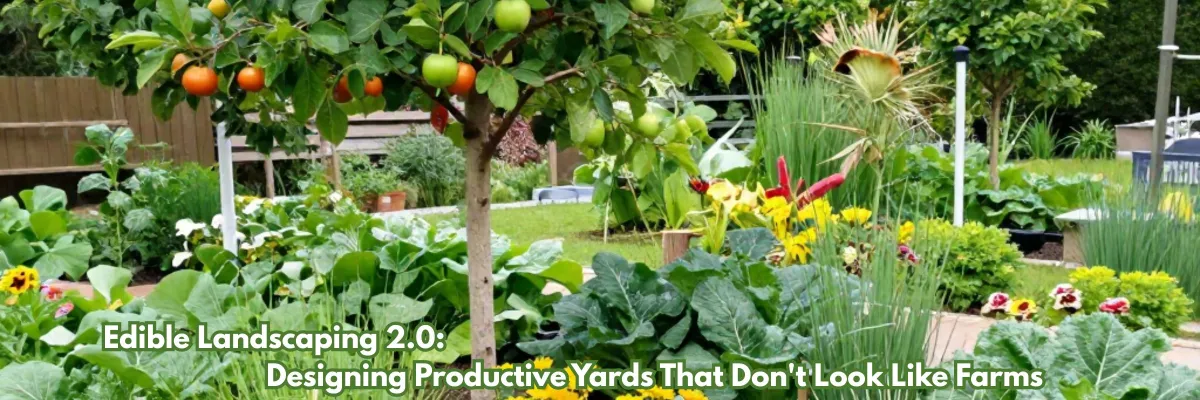
The days of choosing between a beautiful landscape and a productive one are over. Today's homeowners are discovering that edible landscaping—the art of integrating food-producing plants into ornamental garden designs—can create stunning outdoor spaces that are both feast for the eyes and the table. But this isn't your grandmother's vegetable patch relegated to the backyard corner. Welcome to Edible Landscaping 2.0, where curb appeal meets crop yield.
The Evolution of Productive Beauty
Traditional wisdom dictated a clear separation: ornamental plants in the front yard, vegetables hidden in the back. This artificial divide ignored a simple truth—many edible plants are inherently gorgeous. A well-designed edible landscape doesn't announce itself as a food garden; instead, it presents as a sophisticated, layered design that happens to produce pounds of fresh food annually.
"The key is thinking like a landscape designer first and a gardener second," explains Sarah Chen, a landscape architect specializing in edible designs. "You're working with texture, color, form, and seasonal interest—the same principles as any high-end landscape. The fact that you can also eat the plants is almost secondary to the visual impact."
Foundation Plants That Deliver
The backbone of any edible landscape starts with permanent woody plants that provide structure year-round. Fruit trees, when properly selected and maintained, offer spring blossoms, summer shade, fall harvest, and attractive branching patterns in winter. Espaliered apple or pear trees trained flat against a fence or wall create living architecture that maximizes space while producing abundant fruit.
Blueberry bushes deserve particular attention for their multi-season performance. Their delicate spring flowers, summer berries, and brilliant fall foliage rival any purely ornamental shrub, yet they produce fruit for months. Varieties like 'Pink Lemonade' even offer pink berries that create an unexpected pop of color.
Fig trees bring Mediterranean elegance with their distinctive lobed leaves and sculptural growth habit. In warmer climates, they serve as stunning specimen plants, while in colder regions, container-grown figs can anchor a patio design and move indoors for winter.
The Perennial Advantage
Perennial vegetables and herbs form the middle layer of an edible landscape, returning year after year with minimal effort. Artichokes make dramatic architectural statements with their silvery, deeply cut leaves, reaching four feet tall even before producing their edible flower buds. Asparagus, after harvest season, develops into a cloud of ferny foliage that provides textural contrast in the garden.
Rhubarb offers bold, tropical-looking leaves (though only the stems are edible) and varieties with red stalks add striking color. Cardoon, artichoke's cousin, creates an even more dramatic silhouette and its purple thistle-like flowers attract beneficial insects.
Herb spirals—vertical stone structures that create multiple microclimates—concentrate perennial herbs like rosemary, thyme, oregano, and sage into compact, eye-catching features. These living sculptures provide fresh seasonings year-round while requiring almost no maintenance once established.
Annual Edibles as Design Elements
Annual vegetables and herbs fill seasonal gaps and provide flexibility to change the garden's look each year. The key is selecting varieties chosen for aesthetics as much as productivity.
Rainbow chard, with its jewel-toned stems in red, orange, yellow, and pink, creates ribbons of color in borders. 'Redbor' kale forms burgundy rosettes that look more like ornamental cabbage than a salad green. Purple or golden varieties of traditional vegetables—eggplant, peppers, beans, tomatoes—add unexpected color to familiar forms.
Many herbs pull double duty as ornamental edgings. 'Spicy Globe' basil forms perfect spheres without trimming, while purple basil varieties create dark, dramatic foliage. Parsley, both curly and flat-leaf varieties, creates lush, textured edges that rival traditional boxwood in formal designs.
Vertical Integration
Growing upward maximizes production in limited spaces while adding height and visual interest. Pole beans on decorative trellises create living walls. Vining squash or cucumbers scrambling over arbors provide summer shade. Passion fruit vines offer exotic flowers before producing fruit, while hardy kiwi vines create dense, attractive screening with the bonus of fall harvest.
Even tomatoes, typically staked in utilitarian rows, can be grown on decorative obelisks or trained as single-stem specimens in large containers that serve as focal points. Cherry tomato varieties that cascade from hanging baskets bring the vegetable garden to eye level.
The Groundcover Revolution
Traditional lawns demand water, fertilizer, and weekly mowing while providing zero food. Edible groundcovers offer a productive alternative. Alpine strawberries create a lush carpet of green leaves punctuated by small, intensely flavored berries from spring through fall. They tolerate partial shade and never send out runners, making them far more manageable than traditional strawberries.
Low-growing herbs like creeping thyme release fragrance when walked upon and produce tiny flowers that attract pollinators. Corsican mint creates a moss-like mat that smells delightful underfoot. These living carpets require no mowing and minimal water once established.
Design Principles for Success
Successful edible landscapes follow key design principles. First, they layer plants by height, creating depth and visual interest from ground level to tree canopy. Second, they emphasize variety in leaf texture and form—the ferny asparagus against bold rhubarb, the spiky chives contrasting with broad-leafed lettuces.
Color coordination matters. Planting purple basil with orange marigolds and red peppers creates a warm-toned palette. Silver artemisia, blue-green kale, and white-flowering cilantro produce a cool, sophisticated scheme.
Succession planting keeps the garden looking fresh. As spring lettuces bolt, summer squash fills the space. When tomatoes finish, fall brassicas take over. Strategic planning ensures the landscape never looks bare or neglected.
Beyond the Visual
Edible landscapes engage more senses than ornamental ones. Herb gardens release fragrance when brushed. Fruit trees perfume the air during bloom. The sound of children (or adults) grazing on sun-warmed tomatoes and berries brings gardens to life in ways purely decorative landscapes cannot.
There's also the compelling sustainability angle. Food gardens reduce transportation impacts, eliminate packaging waste, and connect people to the source of their meals. They create habitat for pollinators and beneficial insects. They capture rainwater and build soil health.
The Investment Perspective
From a property value standpoint, well-executed edible landscapes increasingly appeal to buyers, particularly in markets where sustainability and local food systems resonate. A mature fruit tree or established berry patch represents years of growth that new homeowners can enjoy immediately.
The return on investment extends beyond potential resale value. Productive landscapes provide hundreds or thousands of dollars worth of organic produce annually while requiring less maintenance than traditional ornamental plantings once established.
Getting Started
Begin by assessing your space's conditions—sun exposure, soil type, water access. Start small with a few key productive plants integrated into existing beds rather than attempting a complete overhaul. Replace one ornamental shrub with blueberries, add a dwarf fruit tree, edge a bed with herbs.
Success builds confidence and knowledge. What begins as a few tomato plants among the roses can evolve into a fully integrated edible landscape that feeds both body and soul while remaining the envy of the neighborhood.
The future of landscaping isn't about choosing beauty or bounty—it's about recognizing that the most satisfying gardens provide both.