Who’s Buying Houses in 2026? The Generational Shift Sellers Need to Understand
For sellers, this data is a reminder that marketing a home is not one-size-fits-all. A home’s best buyer may not be who you first expect. A property with low-maintenance features may appeal strongly to Boomers. A home with flexible office space may attract Millennials or Gen X buyers. A well-priced starter home may still draw interest from younger buyers trying to enter the market.
Published June 30, 2026
The housing market is never just about interest rates, inventory, or home prices. It is also about people — who is buying, why they are buying, and what matters most to them when they make a move.
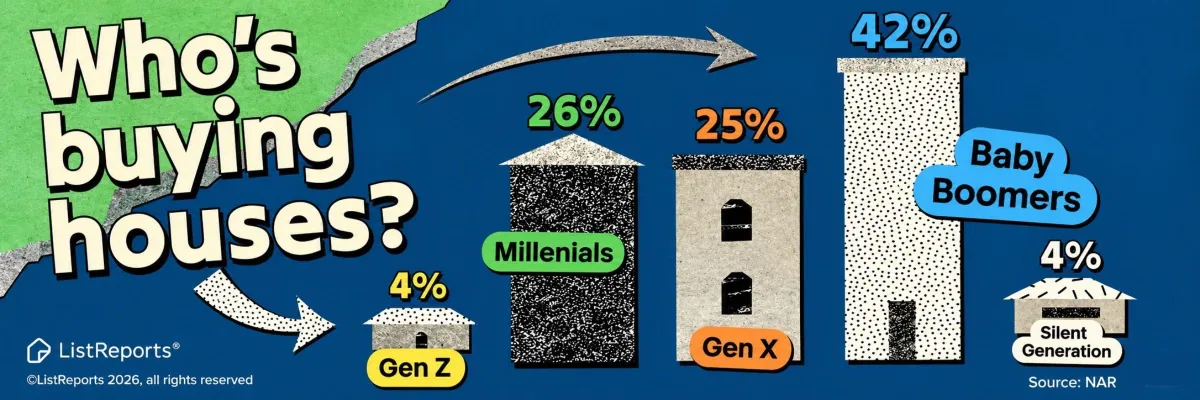
According to the data shown in this image, Baby Boomers currently represent the largest share of homebuyers at 42%. Millennials follow at 26%, Gen X makes up 25%, while Gen Z and the Silent Generation each account for 4%.
At first glance, many people may assume younger buyers dominate the housing market. After all, Millennials and Gen Z are often associated with first-time homebuying. But this data tells a different story. Baby Boomers are playing a major role in today’s real estate activity, and that matters for sellers, buyers, and real estate professionals.
Many Baby Boomers are buying homes for lifestyle reasons. Some are downsizing after years in a larger family home. Others are relocating closer to family, looking for single-story living, moving into active adult communities, or purchasing homes that better match their retirement plans. For this group, convenience, comfort, location, and long-term livability often matter just as much as price.
Millennials remain a powerful force in the market as well. Many are moving from renting to owning, growing their families, or searching for homes with more space. They often value updated kitchens, flexible rooms, outdoor areas, and neighborhoods with access to schools, parks, restaurants, and commuting options.
Gen X buyers, at 25%, are also important. Many are in their peak earning years and may be buying larger homes, relocating for work, helping children transition into adulthood, or preparing for their own next stage of life. This group often looks carefully at value, long-term investment potential, and practical features.
For sellers, this data is a reminder that marketing a home is not one-size-fits-all. A home’s best buyer may not be who you first expect. A property with low-maintenance features may appeal strongly to Boomers. A home with flexible office space may attract Millennials or Gen X buyers. A well-priced starter home may still draw interest from younger buyers trying to enter the market.
The key is understanding the audience most likely to connect with the home. Strong real estate marketing should highlight the features that matter to today’s active buyers — not just the square footage and number of bedrooms, but the lifestyle the home supports.
The big takeaway is simple: Baby Boomers are not leaving the housing market. They are helping shape it. Sellers who understand this shift can position their homes more effectively, and buyers can better understand who they may be competing with in today’s market.